
The 6 Best Electric Space Heaters for Camper Vans and RVs (2026)
- Data from official spec sheets
- Public scoring formula
- No paid placements
The Teioe M7 is the best electric heater for most camper vans on a hookup: 400 or 800 W, so it fits a 15 A outlet with room to spare, with tip-over and overheat protection. On a 30 A RV hookup, the Xtreme Heaters XTRCAB (750/1500 W) and the DREO Atom One (1500 W, thermostat) give more heat.
On this page (10)
- How do the 6 electric heaters compare?
- How many watts can my hookup handle?
- Which one fits your rig?
- The 6 best electric space heaters, reviewed
- Can I run an electric heater on battery?
- How do I use an electric heater safely in an RV?
- How do I choose an electric heater?
- What are the most common buying mistakes?
- Which one should I pick by cost level?
- What is our verdict?
The Teioe M7 is the best electric space heater for most camper vans on a hookup. Its listing declares two settings, 400 and 800 W, so it runs on a 15 A household outlet with plenty of headroom. It adds tip-over and overheat protection and 45 dB. On a 30 A RV hookup, the Xtreme Heaters XTRCAB (750/1500 W) and the DREO Atom One (1500 W with a thermostat) put out nearly twice as much heat.
We ranked six electric heaters sold on Amazon.com using only their listings and our published scoring. We have not run them in an RV. The key number is wattage, because it decides whether the heater fits your hookup.
Teioe M7 800W Mini Ceramic Heater
400-800 W
400 or 800 W, tip-over and overheat protection, 45 dB and 0.7 kg (about 1.5 lb).
The catch: No thermostat or warranty on the listing.
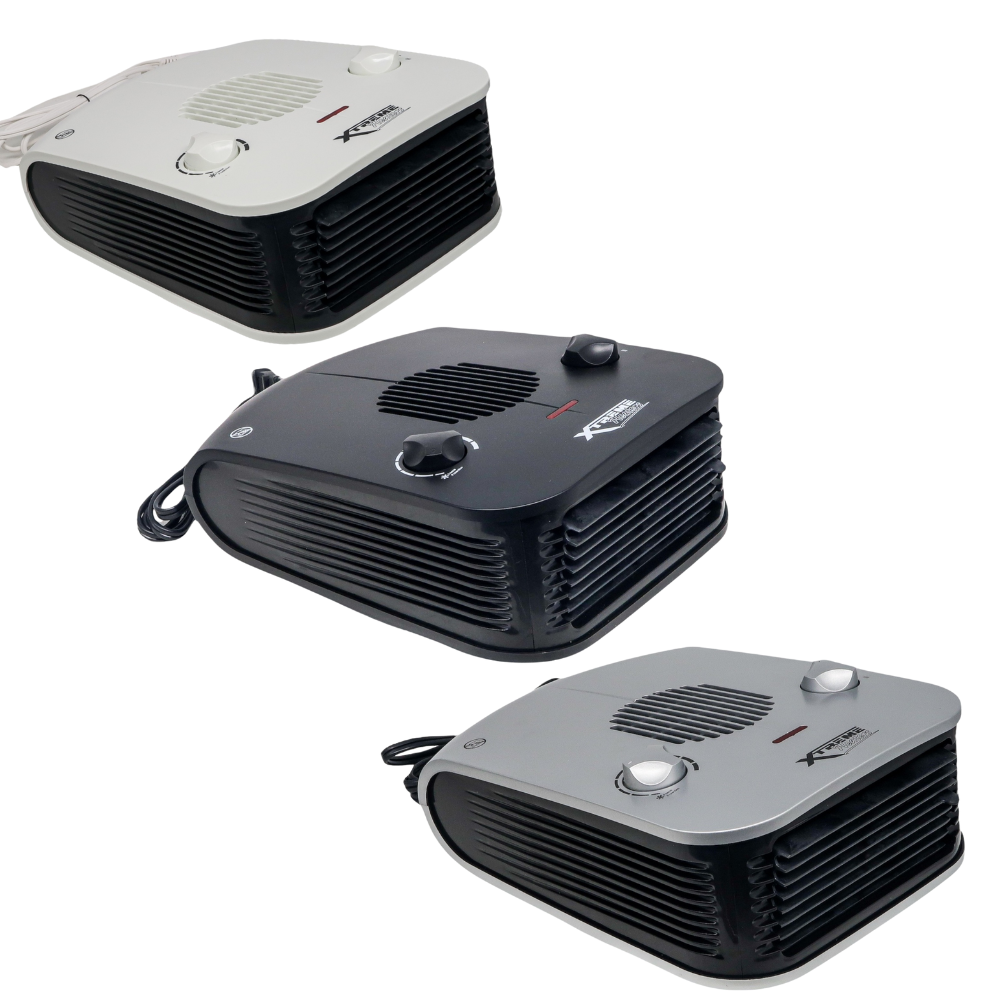
Xtreme Heaters XTRCAB 1500W Cabin Heater
750-1,500 W
750 or 1500 W fan heater built for boats, cabins and RVs, with tip-over and overheat protection.
The catch: The listing gives no voltage, noise, weight or warranty.
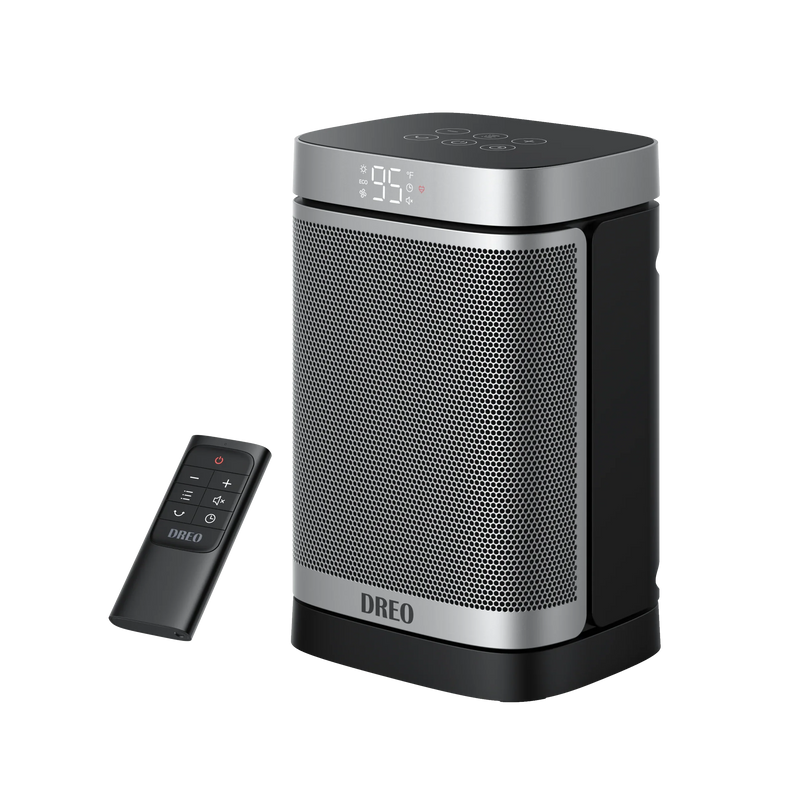
DREO Atom One DR-HSH004 1500W Ceramic Heater
1,500 W · thermostat
1500 W with a digital thermostat, tip-over and overheat protection and 37.5 dB.
The catch: No low-wattage setting declared: 1500 W is too much for a 15 A outlet with other loads.
How do the 6 electric heaters compare?
All six are 120 V-class plug-in heaters from 200 to 1500 W; the wattage and the low setting decide where they fit. Two declare a low setting at or below 750 W. Empty cells mean the listing does not publish that figure.
| Model | Power (W) | Min power (W) | Type | Thermostat | Tip-over shutoff | Noise (dB) | VanThermia score | Best for | |
|---|---|---|---|---|---|---|---|---|---|
| 800 | 400 | Ceramic | — | Yes | 45 | 8 | 15 A outlets | ||
| 1,500 | 750 | Fan heater | — | Yes | — | 7.5 | 30 A RVs | ||
| 1,500 | — | Ceramic | Yes | Yes | 37.5 | 7.5 | Thermostat control | ||
| 500 | — | Ceramic | — | Yes | 45 | 7 | Two small zones | ||
| 500 | — | Ceramic | — | Yes | 48 | 6 | Desk or bunk | ||
| 200 | — | Ceramic | — | — | — | 6 | Personal warmth |
(affiliate link) · Data from the Amazon listing; offers may change.
How many watts can my hookup handle?
Available watts = volts × amps. In the US and Canada, hookups run at 120 V. Amps drawn = watts ÷ 120. Leave room for the fridge, lights and chargers, and check your own setup with the RV power calculator.
| Supply | Available | 1500 W heater leaves | 800 W heater leaves |
|---|---|---|---|
| 15 A household outlet | 1,800 W | 300 W | 1,000 W |
| 20 A outlet | 2,400 W | 900 W | 1,600 W |
| 30 A RV hookup | 3,600 W | 2,100 W | 2,800 W |
| 50 A RV service (two 120 V legs) | 12,000 W | plenty | plenty |
At 120 V, the Teioe draws about 3.3 A on low and 6.7 A on high. The DREO and the Xtreme draw 12.5 A at 1500 W. If you also run an air conditioner, remember that compressors start with a surge of 2 to 3 times their running power.
Which one fits your rig?
Match the heater’s wattage to your weakest hookup. Tap a card to jump to the full entry.
Pick by what you need
The 6 best electric space heaters, reviewed
The M7 gets the balance right for a van. Its low setting, 400 W, draws about 3.3 A at 120 V; high, 800 W, about 6.7 A. That leaves room on a 15 A outlet for a fridge and chargers, and on a 30 A hookup it barely registers.
It declares both tip-over and overheat protection, stays under 45 dB and has an automatic shut-off timer. Its 800 W is about 2,730 BTU/h of heat, enough for a small insulated van in cool weather. The listing mentions no thermostat, so you manage the temperature yourself, and it states no warranty. Its heats-in-seconds claims are marketing.
Pros
- 400 or 800 W: fits 15 A outlets with room to spare
- Tip-over and overheat protection
- 45 dB and 0.7 kg (about 1.5 lb)
Cons
- No thermostat mentioned: it runs until you switch it off or the timer does
- No warranty stated
- Best for
- Camper vans on hookups and household outlets
- Skip it if
- Large RVs in hard frost
Specifications
| Power (W) | 800 |
|---|---|
| Min power (W) | 400 |
| Type | Ceramic |
| Voltage (V) | 120 |
| Tip-over shutoff | Yes |
| Overheat protection | Yes |
| Noise (dB) | 45 |
| Weight (kg) | 0.7 |
The XTRCAB is the one heater here designed for boats, cabins and RVs rather than offices. It is a forced-air fan heater with two settings. At 750 W it draws about 6.25 A, fine on a 15 A outlet; at 1500 W, about 12.5 A, which suits a 30 A hookup.
It declares a tip-over switch and overheat protection, and the listing cites UL 1278 certification. The rest of the listing is thin: no voltage, noise, weight or warranty. It is sold in the US market, but check the plug and rating on the product page before buying. At 1500 W it gives about 5,120 BTU/h, the most here alongside the DREO.
Pros
- 750 or 1500 W: a low setting for 15 A, full power for 30 A
- Tip-over switch and overheat protection
- Designed for boats, cabins and RVs; UL 1278 per the listing
Cons
- Voltage, noise, weight and warranty not stated
- No thermostat mentioned
- Best for
- Travel trailers and motorhomes on 30 A hookups
- Skip it if
- Buyers who want every spec on paper
Specifications
| Power (W) | 1,500 |
|---|---|
| Min power (W) | 750 |
| Type | Fan heater |
| Tip-over shutoff | Yes |
| Overheat protection | Yes |
3. DREO Atom One DR-HSH004 1500W Ceramic Heater
1,500 W · thermostat
7.5/10 · VanThermia scoreThe Atom One is the most complete heater on paper. It is the only one here with a declared thermostat, so it holds a set temperature instead of running flat out. It adds tip-over and overheat protection, a remote, a timer and an ECO mode, and it declares 37.5 dB.
The catch is its single declared power figure, 1500 W. On a 30 A hookup that leaves 2100 W for other loads, which is comfortable. On a 15 A household outlet it leaves 300 W, so the breaker may trip. It weighs 1.8 kg and carries a 1-year warranty, extendable by registration.
Pros
- Digital thermostat, the only one declared here
- Tip-over and overheat protection
- 37.5 dB, the quietest figure here; 1-year warranty
Cons
- No low-wattage setting declared: 1500 W leaves only 300 W on a 15 A outlet
- 1.8 kg (about 4 lb), the heaviest here
- Best for
- RVs on 30 A hookups, bedrooms
- Skip it if
- Vans that plug into household outlets
Specifications
| Power (W) | 1,500 |
|---|---|
| Type | Ceramic |
| Voltage (V) | 120 |
| Thermostat | Yes |
| Tip-over shutoff | Yes |
| Overheat protection | Yes |
| Noise (dB) | 37.5 |
| Weight (kg) | 1.8 |
| Warranty (years) | 1 |
The shinic pack gives you two small ceramic heaters, each 500 W, about 4.2 A at 120 V. Both together draw 1000 W, still under the 1800 W of a 15 A outlet. That lets you place heat where you sit and where you sleep.
Each unit declares tip-over and overheat protection and stays below 45 dB. There is a single on-off switch, with no low setting or thermostat. The listing’s claim of heating an area in seconds is marketing. Use it as spot heat, not as a van’s only heater in freezing weather.
Pros
- Two 500 W heaters: one per zone, or both on a 15 A outlet
- Tip-over and overheat protection
- 45 dB, 0.5 kg each (about 1.1 lb) and a 1-year warranty
Cons
- One switch only: no low setting or thermostat
- 500 W each is modest heat
- Best for
- Heating the bed area and the cab separately
- Skip it if
- Fast warm-up of a cold RV
Specifications
| Power (W) | 500 |
|---|---|
| Type | Ceramic |
| Voltage (V) | 120 |
| Tip-over shutoff | Yes |
| Overheat protection | Yes |
| Noise (dB) | 45 |
| Weight (kg) | 0.5 |
| Warranty (years) | 1 |
The DQ1722D is a mini ceramic heater designed for an office desk. At 500 W it draws little current and fits any outlet or hookup, and it declares tip-over protection.
It trails the shinic pack because its listing leaves out overheat protection and a warranty, and its 48 dB is the highest noise figure here. As a single small heater for one person at a table or bunk, it works. As a van’s main heater, 500 W is too little on a cold night.
Pros
- 500 W: about 4.2 A at 120 V
- Tip-over protection
- 0.6 kg (about 1.3 lb)
Cons
- No overheat protection or thermostat mentioned
- 48 dB, the loudest figure here; no warranty stated
- Best for
- A bunk, desk or cab corner on a small outlet
- Skip it if
- Heating a whole van
Specifications
| Power (W) | 500 |
|---|---|
| Type | Ceramic |
| Voltage (V) | 120 |
| Tip-over shutoff | Yes |
| Noise (dB) | 48 |
| Weight (kg) | 0.6 |
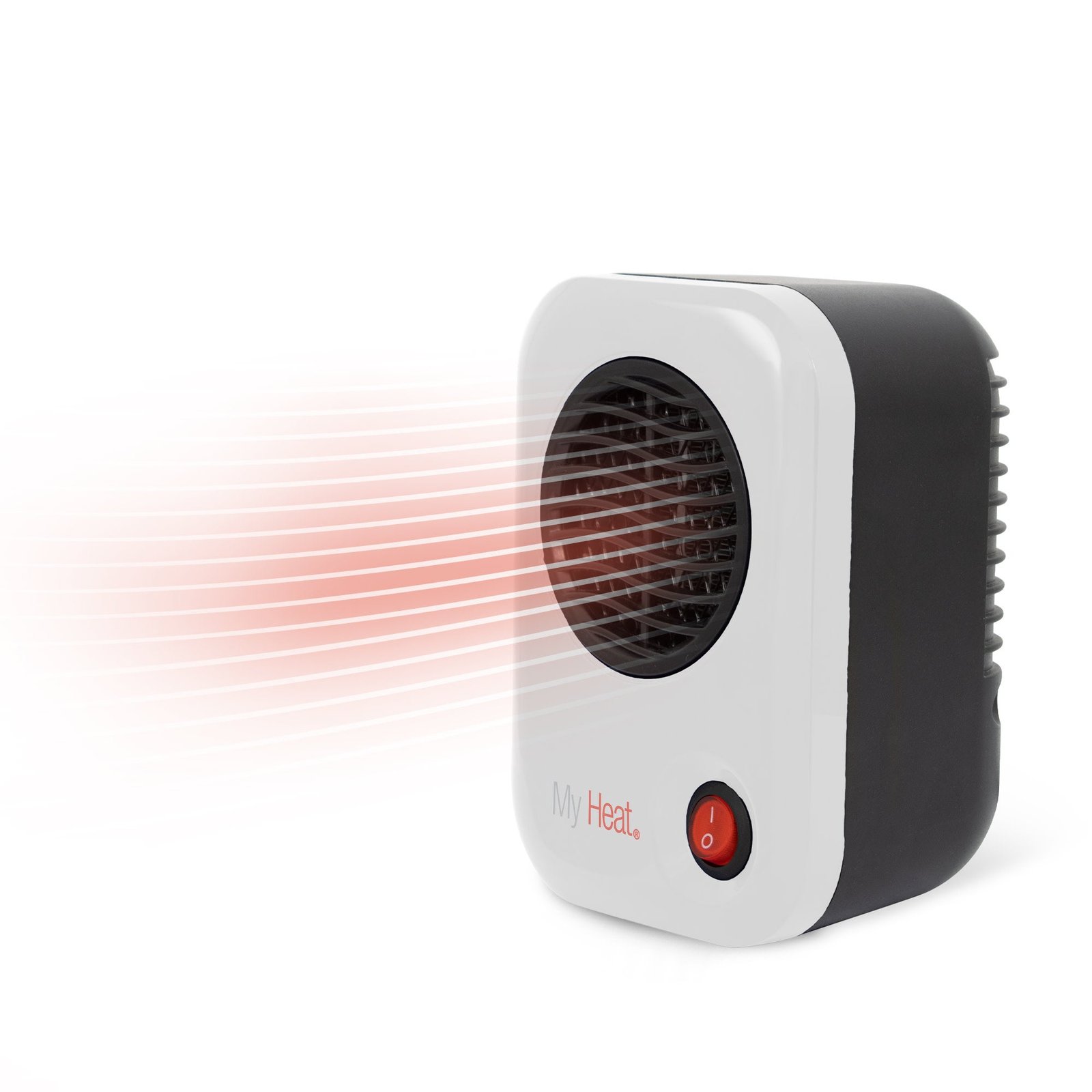
The MyHeat 101 is honest about what it does: the maker says it is designed to warm you, not a room. At 200 W it is the lowest draw here, about 1.7 A at 120 V, and it has overheat protection and a 3-year warranty, the longest in this list.
That output is about 680 BTU/h, too little for any van interior. It makes sense as a personal heater on a weak supply, next to a bigger heat source. The listing does not declare a tip-over shutoff, so keep it on a stable surface.
Pros
- 200 W: about 1.7 A, the lowest draw here
- Overheat protection and a 3-year warranty
- 0.5 kg (about 1.1 lb)
Cons
- Designed to warm a person, not a room: about 680 BTU/h
- No tip-over shutoff declared
- Best for
- Warm feet or hands at a desk on a weak supply
- Skip it if
- Heating the living space
Specifications
| Power (W) | 200 |
|---|---|
| Type | Ceramic |
| Voltage (V) | 120 |
| Overheat protection | Yes |
| Weight (kg) | 0.5 |
| Warranty (years) | 3 |
Can I run an electric heater on battery?
Technically yes, practically only for a few minutes of boost. Watt-hours = volts × amp-hours, and an inverter loses around 10-15 %. Here is how long the Teioe M7 lasts on a full battery bank through an inverter, assuming about 12 % inverter loss and full use of the battery:
| 12 V battery | Energy | 400 W (low) | 800 W (high) |
|---|---|---|---|
| 100 Ah | 1,200 Wh | about 2.6 h | about 1.3 h |
| 200 Ah | 2,400 Wh | about 5.3 h | about 2.6 h |
| 300 Ah | 3,600 Wh | about 7.9 h | about 4 h |
Those figures assume you can drain the bank completely, which most batteries should not do. For off-grid nights, a diesel heater uses a fraction of that battery. The RV power calculator lets you set your own depth of discharge and duty cycle.
How do I use an electric heater safely in an RV?
Buy one with tip-over and overheat protection, give it space and plug it straight into the outlet. Small rigs put heaters close to bedding, curtains and clothes, so clearance matters more than in a house.
- Clearance: keep it away from bedding, curtains and anything that can fall on it.
- Stable base: a floor or fixed table, not a bunk or a seat cushion.
- Direct plug: avoid thin extension cords and power strips for a 1500 W load.
- Right setting: use low when you share a 15 A outlet with other loads.
- Off when you leave: none of these six declares a frost mode for an empty RV.
How do I choose an electric heater?
Start from your hookup, then pick safety features, then a thermostat if you want one. Divide the heater’s watts by 120 to get its amps, and keep the total under your hookup’s rating. A low setting at or below 750 W is the most useful single feature for vans that sometimes plug into household outlets.
Check the heat you need with the heater size calculator, and read what size heater do I need for the method. If you camp off-grid, electric heat is not practical; look at diesel heaters instead. Our camper heaters hub compares the three types.
What are the most common buying mistakes?
The most common mistake is buying a 1500 W heater for a van that plugs into household outlets. Here are five to avoid:
- Ignoring the hookup. A 15 A outlet gives 1800 W; a 1500 W heater leaves almost nothing for other loads.
- Running two big loads at once. A 1500 W heater plus an electric kettle or AC compressor on 30 A can trip the pedestal breaker.
- Expecting battery heat. An 800 W heater drains a 100 Ah 12 V battery in a little over an hour through an inverter.
- Skipping tip-over protection. Vans move and get bumped; five of these six declare a tip-over shutoff.
- Buying a personal heater for a room. 200-500 W warms a person, not a van on a freezing night.
Which one should I pick by cost level?
Among these six, cost level follows features more than wattage. We do not list prices because they change daily; check the current listing.
- Entry: Lasko MyHeat 101, Amazon Basics DQ1722D and the shinic 2-pack. Small, simple heaters for spot heat.
- Mid: Teioe M7 and Xtreme Heaters XTRCAB. Two settings each, one with a low below 750 W.
- High: DREO Atom One. A thermostat, remote and the quietest figure here.
What is our verdict?
Frequently asked questions
What size electric heater can I run on a 30 A RV hookup?
A 30 A hookup at 120 V supplies 3600 W. A 1500 W heater uses 12.5 A of that, leaving about 2100 W for everything else. Running two 1500 W heaters plus other loads will trip the breaker.
Can I run a space heater on a 15 A household outlet?
Yes, with care. A 15 A outlet gives 1800 W. A 1500 W heater leaves only 300 W for anything else, so a 400-800 W heater like the Teioe M7 is the safer match when you plug into a house outlet.
Can I run an electric heater off my van battery?
Only for short bursts. An 800 W heater draws about 67 A from a 12 V battery, plus 10-15 % inverter losses. A 100 Ah 12 V battery holds 1,200 Wh, which lasts a little over an hour at that rate.
Are ceramic heaters safe in an RV?
Choose one with tip-over and overheat protection, keep it clear of bedding and curtains, and plug it straight into the outlet rather than a thin extension cord. Five of the six here declare a tip-over shutoff.
How much heat does a 1500 W heater give?
An electric heater turns its watts into heat, so 1500 W is about 5,120 BTU/h (1500 ÷ 0.293). Whether that is enough depends on your volume, insulation and outside temperature.
Based on official spec sheets, manuals and published owner feedback. We have not physically tested every model. How we review.