
Camper Van and RV Ventilation: Roof Fans, 12 V Fans and Dehumidifiers
A camper stays dry when moist air leaves faster than you add it. A roof vent fan does most of the work, a 12 V fan moves air around you, and a dehumidifier removes water the vent cannot. The EPA advises keeping indoor humidity below 60 %.
Damp in a camper van or RV is fixed by moving moist air out faster than you create it. A roof vent fan handles most of that. A 12 V fan keeps air moving around you, and a dehumidifier pulls out the water that ventilation alone cannot. The EPA recommends keeping indoor humidity below 60 %.
This hub explains how each type works, the five things to check before buying and how six popular models compare on paper.
Why does a camper get so damp?
Because a small, closed space fills with water vapor from people, cooking and sometimes heating. That moist air condenses when it touches cold surfaces such as glass or bare metal. Left alone, the result is dripping windows, wet bedding and mold.
The EPA advises keeping indoor humidity below 60 %, ideally between 30 and 50 % (EPA, mold and moisture). Our camper condensation guide walks through the causes and the fix, step by step.
How does each type of ventilation work?
Roof vent fans swap inside air with outside air, 12 V fans stir the air you already have, and dehumidifiers take water out of it. They solve different problems, so many rigs use two of them.
| Type | What it does | Good for | Limits |
|---|---|---|---|
| Roof vent fan | Pulls air out through a roof opening, or in if reversible | Steam from cooking, overnight breath, summer heat | Needs a roof cut-out, usually 14 × 14 in (35.6 × 35.6 cm) |
| 12 V fan | Moves air inside the living space | Comfort in summer, air over a bed | Does not remove moisture on its own |
| Dehumidifier | Condenses or absorbs water from the air | Parked rigs, winter, closets | Uses power; small models remove little water |
Roof fans with a rain cover or rain sensor can keep running in wet weather, which is exactly when you need them. Reversible fans also pull fresh air in, useful on hot nights.
Dehumidifiers come in four kinds. Compressor units perform poorly in the cold. Desiccant units work better at low temperatures. Peltier “mini” units remove very little water. Non-electric absorbers, such as calcium chloride tubs, only suit closets or a rig in storage.
How do I choose in 5 points?
Start with the roof fan, then decide whether you also need a dehumidifier.
- Airflow and speeds. More cubic feet per minute (cfm) clears steam faster; more speeds let you run it quietly at night. See our ranking of the best RV roof vent fans.
- Rain protection. A built-in rain shield, a lid that runs closed or a rain sensor keeps the fan working through bad weather.
- Power draw on 12 V. Amp-hours = watts × hours ÷ volts. A 25 W fan running 8 hours uses about 17 Ah from a 12 V battery. Check your budget with the RV power calculator.
- Real dehumidifier capacity. Look for liters or pints per day and the test conditions. A tank size is not a daily capacity. Our best RV dehumidifiers page separates the two.
- Cold-weather performance. For winter use, choose a desiccant dehumidifier or one rated to work near freezing.
Ventilation works far better in an insulated shell. If your walls are bare metal, read about van insulation too.
How do the main models compare?
These six cover roof fans, 12 V fans and dehumidifiers. Every figure comes from the Amazon listing. An empty cell means the manufacturer does not publish it, or the spec does not apply to that type.
| Model | Airflow (m³/h) | Speeds | Power (W) | Noise (dB) | Capacity (L/day) | Weight (kg) | VanThermia score | Best for | |
|---|---|---|---|---|---|---|---|---|---|
| 1,529 | 10 | — | — | — | — | 9 | All-weather roof fan | ||
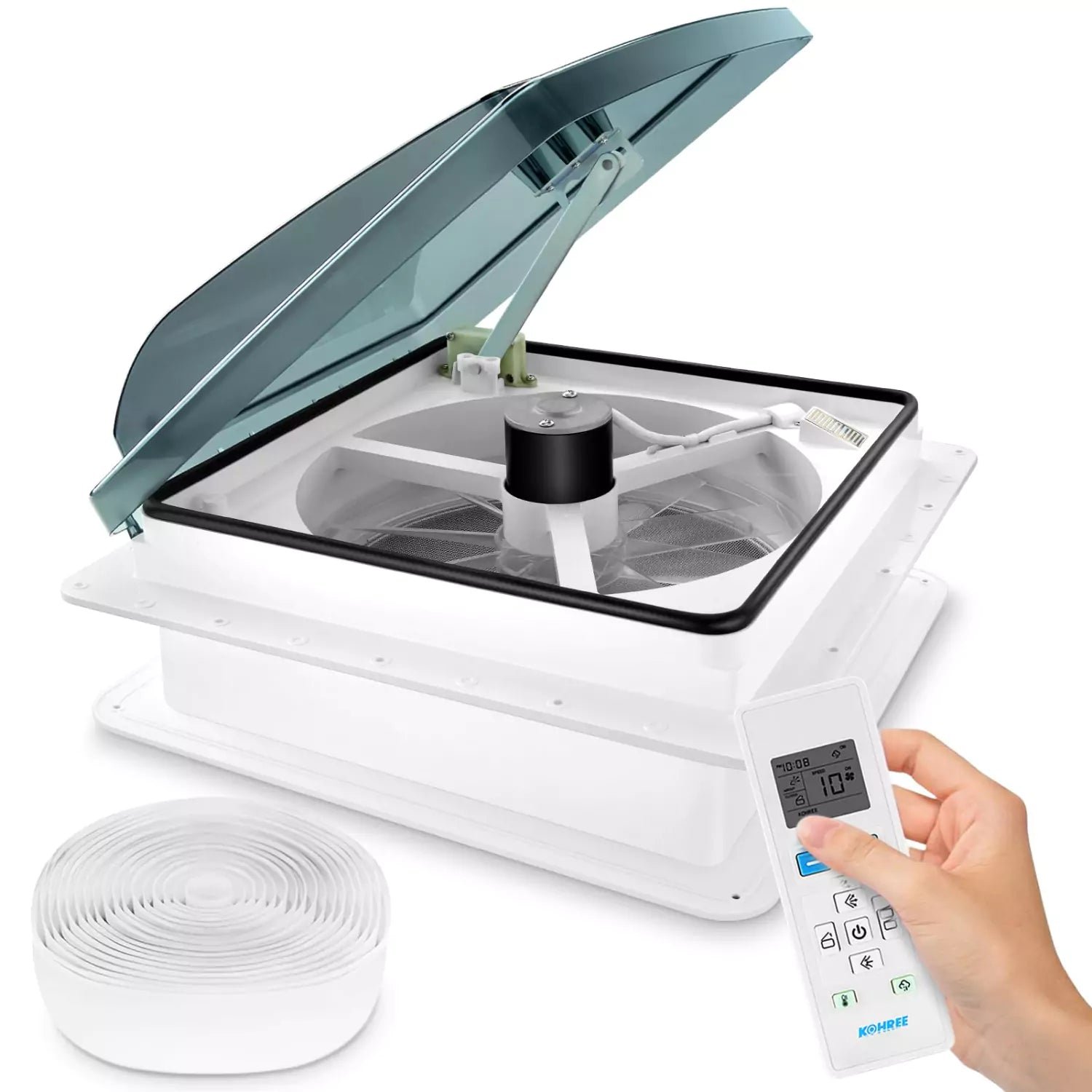
| 1,587 | 10 | 25 | 50 | — | 5 | 9 | Roof fan with remote | ||
| — | 4 | — | 40 | — | 1 | 7.5 | Oscillating 12 V fan | ||
| — | 3 | — | 35 | — | 0.7 | 6.5 | Quiet 12 V or USB-C fan | ||
| — | — | — | — | 9 | — | 7.5 | Cold-weather dehumidifier | ||
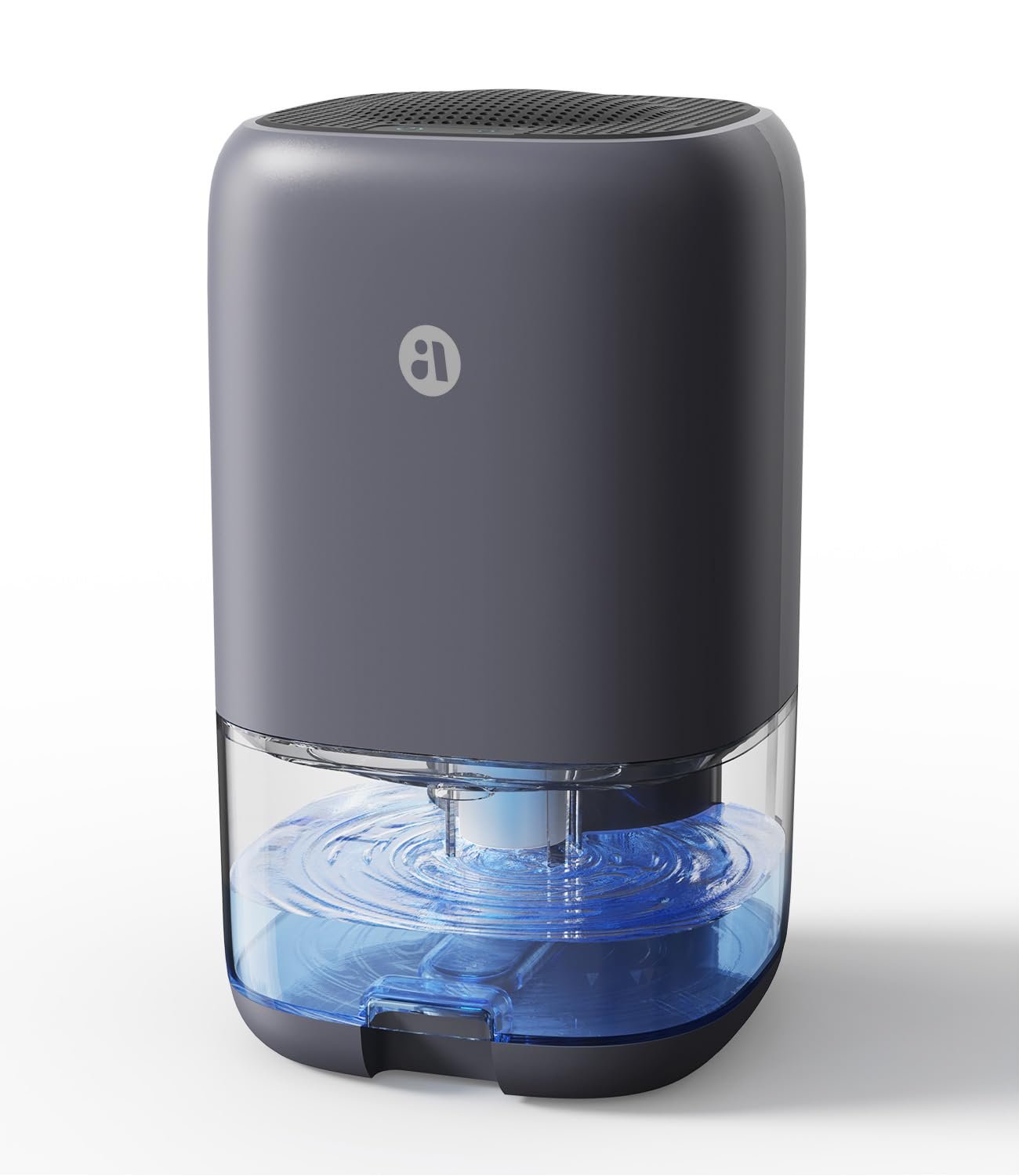
| — | — | 40 | 28 | 0.45 | 1 | 6.5 | Small, quiet spaces |

(affiliate link) · Data from the Amazon listing; offers may change.
Two details stand out. The Maxxfan Plus 00-04550K and the Kohree KR5312 both declare more than 1,500 m³/h, about 900 cfm (m³/h ÷ 1.7). The Maxxfan runs with its lid closed; the Kohree has a rain sensor and a remote.
The dehumidifiers differ by a factor of twenty. The Ivation IVADDH09 declares 9 L (about 19 pints) a day. The TABYIK DH-CS01 declares 0.45 L (about 1 pint) a day, measured in warm, very humid air.
Where should I go next?
Pick the page that matches your problem:
- Rankings: the best RV roof vent fans and the best RV dehumidifiers. A ranking of 12 V fans is on the way.
- Guide: how to stop condensation in a camper.
- Tool: the RV power calculator tells you how long a fan or dehumidifier runs on your battery.
- Related: heating choices affect damp too. Propane heaters without a flue add water vapor, while diesel and electric heat is dry. See camper heaters.
All about camper ventilation and damp control
Rankings and picks
- The 6 Best RV Dehumidifiers of 2026, by Real CapacityThe 6 best dehumidifiers for RVs and camper vans in 2026, compared on real daily capacity, type (desiccant or Peltier), cold-weather use, power and noise.
- The 7 Best RV Roof Vent Fans of 2026The 7 best RV and camper van roof vent fans of 2026 compared on airflow, speeds, reversible flow, rain protection, 12 V draw and 14 × 14 in fit.
Guides and calculators
Frequently asked questions
What is the best way to stop damp in a camper van?
Ventilate first, then add insulation without thermal bridges, dry heat and, if needed, a dehumidifier. A roof vent fan pulling moist air out while you cook and sleep does the most for the least power.
What humidity should I aim for inside an RV?
The EPA recommends keeping indoor humidity below 60 %, ideally between 30 and 50 %, to prevent mold. A simple hygrometer tells you where you stand.
Is a 12 V fan enough to ventilate a van?
No. A 12 V fan moves air around inside but does not swap it with outside air. For damp control you need an opening to the outside, ideally a roof vent fan set to exhaust.
Do small Peltier dehumidifiers work in a camper?
They remove very little water. The TABYIK DH-CS01 declares 0.45 L (about 1 pint) a day, measured in warm, very humid air. They help in a closet or a very small space, not against heavy condensation.
Which dehumidifier type works best in cold weather?
Desiccant models. Compressor dehumidifiers lose output in the cold, while desiccant units keep working at low temperatures. The Ivation IVADDH09 lists a range down to 33 °F (1 °C).