
The 6 Best RV Carbon Monoxide Detectors of 2026
- Data from official spec sheets
- Public scoring formula
- No paid placements
The Kidde C3010D is the best CO detector for most camper vans and RVs: its listing declares UL certification, an electrochemical sensor, a sealed 10-year battery and a CO display. If your rig has propane, add a 12 V CO/LP combo such as the Sponiwelly DE201, which cites no standard on its listing.
On this page (8)
The Kidde C3010D is the best carbon monoxide detector for most camper vans and RVs. Its listing declares UL certification, an electrochemical sensor, a sealed 10-year lithium battery and a display showing the CO level, with no wiring needed. If your rig has a propane system, add a 12 V CO/LP combo alarm such as the Sponiwelly DE201, bearing in mind that its listing cites no standard.
We ranked six CO alarms sold on Amazon.com using only the specs on each listing. We have not exposed them to CO ourselves. When a listing leaves out the sensor type or the standard, we say so. Any rig with a diesel or propane heater or a gas stove should carry at least one.

Kidde C3010D 10-Year Battery CO Alarm with Display
UL Certified · 10 yr battery
UL Certified per the listing, electrochemical sensor, sealed 10-year battery and a CO display.
The catch: It says UL Certified without naming the standard, and it does not detect propane.
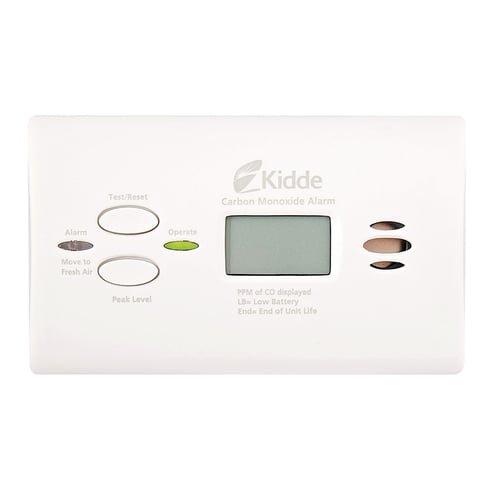
Kidde KN-COPP-B-LPM AA Battery CO Alarm
UL listed
UL listed, electrochemical sensor and replaceable AA batteries you can find anywhere.
The catch: You must replace the batteries, and the listing contradicts itself about a display.
Sponiwelly DE201 12V RV CO & LP Gas Detector
Detects CO and propane, hardwired to 12 V, with an electrochemical sensor and a display.
The catch: The listing cites no standard or certification at all.
How do the 6 CO detectors compare?
Three are portable Kidde battery alarms and three are hardwired 12 V CO/LP combos for RVs. Only two of them, both Kidde, mention UL at all. Empty cells mean the manufacturer does not publish that figure.
| Model | Sensor | Standard | Battery (years) | Display | Gas detection | Power source | VanThermia score | Best for | |
|---|---|---|---|---|---|---|---|---|---|
| Electrochemical | UL Certified | 10 | Yes | — | Battery | 8.5 | Most vans and RVs | ||
| Electrochemical | UL listed | — | — | — | Battery | 7.5 | AA-powered backup | ||
| Electrochemical | — | — | Yes | Yes | 12 V | 7 | 12 V CO and propane | ||
| — | — | — | — | Yes | 12 V | 5.5 | Replacing a flush-mount RV alarm | ||
| — | — | — | Yes | Yes | 12 V | 6 | Flush-mount with display | ||
| Electrochemical | — | — | — | — | Battery | 6 | Travel alarm |
(affiliate link) · Data from the Amazon listing; offers may change.
Here is the checklist at a glance. A dash means the listing does not declare it:
| Alarm | Standard on listing | Sensor | Power | Display | Propane (LP) |
|---|---|---|---|---|---|
| Kidde C3010D | UL Certified | Electrochemical | 10-year sealed battery | yes | – |
| Kidde KN-COPP-B-LPM | UL listed | Electrochemical | AA batteries | – (conflicting) | – |
| Sponiwelly DE201 | – | Electrochemical | 12 V hardwired | yes | yes |
| Safe-T-Alert 35-742-BR | – | – | 12 V hardwired | – | yes |
| Leakbee R503 | – | – | 12 V hardwired | yes | yes |
| Kidde KN-COB-LP2 | – | Electrochemical | AA batteries | – | – |
We left out the MTI Safe-T-Alert 62-541 marine alarm: its listing is almost empty, with no sensor, standard or battery life.
Battery alarm or 12 V combo: which do I need?
Most rigs are best served by both: a certified battery CO alarm, plus a 12 V CO/LP combo if you carry propane. Each covers a weakness of the other.
| Battery CO alarm | 12 V CO/LP combo | |
|---|---|---|
| Works with the house battery off | Yes | No |
| Detects propane leaks | No (in this list) | Yes |
| Standard on the listing | UL mention on two Kidde models | None of the three |
| Installation | Screw to a wall or stand on a shelf | Wired to 12 V, flush-mounted |
| Maintenance | Battery swaps, unless sealed | None for power; test regularly |
A camper van with a diesel heater and no propane only needs the battery alarm. A travel trailer or motorhome with a propane furnace, stove or fridge benefits from the combo too. Check the combo’s power draw against your battery budget with the RV power calculator.
The standard matters because it is the only evidence of how an alarm was tested. In Europe and the UK, EN 50291-2 is the part of the standard written for caravans, motorhomes and boats, with movement and vibration tests; EN 50291-1 is for homes (Safelincs). In the US, the usual standard is UL 2034.
Which one fits your rig?
Match the alarm to your power setup and whether you carry propane. Tap a card to jump to the full entry.
Pick by what you need
- One alarm for a van with a diesel heaterKidde C3010D
- A certified alarm with batteries you can buy anywhereKidde KN-COPP-B-LPM
- CO and propane on the RV 12 V systemSponiwelly DE201
- Replacing an old flush-mount RV combo alarmSafe-T-Alert 35-742-BR
- Flush-mount combo that shows the CO levelLeakbee R503
- A small alarm for hotel rooms and rentalsKidde KN-COB-LP2
The 6 best RV carbon monoxide detectors, reviewed
1. Kidde C3010D 10-Year Battery CO Alarm with Display
UL Certified · 10 yr battery
8.5/10 · VanThermia scoreThe C3010D has the most complete listing in our CO catalog. It declares an electrochemical sensor, UL certification and a 10-year lithium battery that never needs replacing. The display shows the CO level, so you can see a rising reading before the alarm sounds.
It runs on its own battery, which suits vans without a 12 V system and RVs where you switch off the house battery. It can sit on a wall or a shelf. The catch is the wording: the listing says “UL Certified” without naming UL 2034, so check the label. It also does not detect propane.
Pros
- UL Certified and electrochemical sensor, per the listing
- Sealed 10-year lithium battery: no battery swaps
- Digital display shows the CO level
Cons
- Does not name the exact standard, only UL Certified
- Detects CO only, not propane
- Best for
- Vans and RVs with a diesel heater, and as a backup to a 12 V combo
- Skip it if
- Anyone who needs propane leak detection from one unit
Specifications
| Sensor | Electrochemical |
|---|---|
| Standard | UL Certified |
| Battery (years) | 10 |
| Display | Yes |
| Power source | Battery |
The KN-COPP-B-LPM is a simple, portable Kidde alarm. Its listing declares an electrochemical sensor and “UL listed” status, and it runs on two AA batteries. You can mount it or stand it on a surface.
The data has gaps. The title mentions LEDs while the spec table mentions a digital display, so we do not count a display. It also does not name the exact standard. Unlike the C3010D, it needs battery changes, so add them to your pre-trip checks.
Pros
- UL listed, per the listing
- Electrochemical sensor
- Runs on two AA batteries, easy to replace on the road
Cons
- You must replace the batteries
- The listing contradicts itself on whether it has a display
- Best for
- A second alarm in the sleeping area
- Skip it if
- Anyone who wants a sealed battery and nothing to maintain
Specifications
| Sensor | Electrochemical |
|---|---|
| Standard | UL listed |
| Power source | Battery |
3. Sponiwelly DE201 12V RV CO & LP Gas Detector
7/10 · VanThermia scoreThe DE201 has the best specs of the three 12 V combos. Its listing declares an electrochemical sensor, a display and detection of both CO and propane. It is wired permanently to the RV’s 12 V system, so there are no batteries to change.
The listing mentions both an electrochemical and a semiconductor sensor without saying which gas each one detects. More importantly, it cites no standard, not UL 2034 or any other. That is why we recommend it for propane detection alongside a certified battery CO alarm, not instead of one.
Pros
- Detects CO and propane in one unit
- Electrochemical sensor and a display, per the listing
- Hardwired to 12 V: no batteries to replace
Cons
- No standard or certification cited anywhere on the listing
- Only works while the 12 V supply is on
- Best for
- RVs with a propane system and a 12 V house battery
- Skip it if
- Anyone who wants a certified alarm as their only CO protection
Specifications
| Sensor | Electrochemical |
|---|---|
| Display | Yes |
| Gas detection | Yes |
| Power source | 12 V |
The 35-742-BR is a flush-mount CO and propane alarm from the Safe-T-Alert range, sold for RVs. It runs on the vehicle’s 12 V system, and the listing mentions a low-voltage warning.
The listing is thin on the points that matter most. It gives no sensor type and no standard. Its spec table also says “battery powered” and names a smoke-alarm sensor type, both at odds with the 12 V description. Check the unit’s label before you buy, and keep a certified battery CO alarm too.
Pros
- Dual CO and LP (propane) alarm
- Flush-mount unit for the RV 12 V system
- Low-voltage warning, according to the listing
Cons
- No sensor type or standard on the listing
- The spec table contradicts the description on power source
- Best for
- Replacing a flush-mount combo alarm in an RV
- Skip it if
- Vans without a 12 V system
Specifications
| Gas detection | Yes |
|---|---|
| Power source | 12 V |
5. Leakbee R503 12V RV CO & Propane Detector, Flush Mount
6/10 · VanThermia scoreThe R503 detects CO and propane with two independent sensors, according to its listing, and shows the CO level on a digital display. It is a 12 V flush-mount unit meant for motorhomes and travel trailers, and the listing says it replaces an older detector with the same mounting holes.
Like the other combos, it does not say which sensor technology it uses or which standard it meets. The listing also writes CO with a zero, a small sign of a rushed listing. It works well on paper as a propane alarm, backed by a certified CO alarm.
Pros
- Separate CO and propane sensors
- Digital display shows the CO level
- 12 V flush-mount design for motorhomes and trailers
Cons
- Sensor technology not stated
- No standard cited
- Best for
- RV owners who want to see CO readings on a combo alarm
- Skip it if
- Anyone who needs a documented standard
Specifications
| Display | Yes |
|---|---|
| Gas detection | Yes |
| Power source | 12 V |
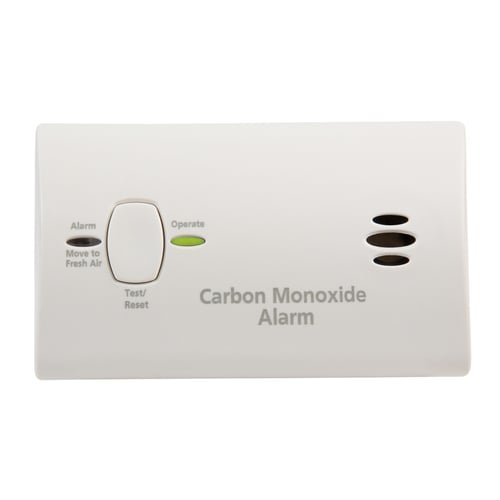
The KN-COB-LP2 is Kidde’s small portable alarm. Its listing declares an electrochemical sensor and AA battery power, and it is marketed for travel as well as the home.
It ranks last because its listing does not cite a standard and has no display. It is a handy extra to take into places you rent. For your rig, the C3010D or the KN-COPP-B-LPM give you more documented protection.
Pros
- Electrochemical sensor
- Portable, marketed for travel as well as the home
- Runs on AA batteries
Cons
- No standard cited on the listing
- No display: LEDs and a siren only
- Best for
- Carrying into rentals, cabins or hotel rooms
- Skip it if
- Your main alarm in an RV
Specifications
| Sensor | Electrochemical |
|---|---|
| Power source | Battery |
How do I choose an RV CO detector?
Choose by declared standard first, then sensor, power source, display and propane detection. A declared standard (UL 2034 in the US, EN 50291-2 for RVs in Europe and the UK) is the best evidence of testing. An electrochemical sensor is what the certified alarms here use. A sealed battery or 12 V wiring removes the flat-battery risk, and a display shows the CO level.
If your rig has propane, a CO/LP combo adds leak detection. When two alarms look similar, pick the one whose listing gives you more facts: a named standard, a sensor type and a battery life are signs of a maker willing to document its product. Our carbon monoxide guide for campers covers symptoms, placement and what to do if the alarm sounds.
What are the most common mistakes?
The most common mistake is relying on a combo alarm with no declared standard. Here are five to avoid:
- Trusting “UL” without checking. “UL listed” or “UL Certified” is not the same as naming UL 2034; check the label.
- Relying on the 12 V supply alone. A hardwired alarm stops when you switch off the house battery. Keep a battery alarm too.
- Fitting it anywhere. Mounting height and position vary by model. Follow the manual.
- Treating an alarm as permission. An alarm does not make a propane heater safe to sleep with. See the best propane heaters for indoor-rated models and their limits.
- Ignoring a faulty installation. A leaking diesel heater exhaust needs fixing, not just an alarm. Read how to install a diesel heater.
Which one should I pick by cost level?
The portable Kidde units sit at the entry and mid level, and the hardwired RV combos at mid to high. We do not list prices because they change daily; check the current listing.
- Entry: Kidde KN-COB-LP2 and Kidde KN-COPP-B-LPM. The KN-COPP-B-LPM is the one with a UL mention.
- Mid: Kidde C3010D, Sponiwelly DE201 and Leakbee R503. The Kidde adds a sealed battery; the other two add propane detection.
- High: Safe-T-Alert 35-742-BR, the classic flush-mount RV combo.
For the rest of your safety and insulation setup, see insulation and safety. If you run a diesel heater, the diesel heater ranking covers the heaters themselves.
What is our verdict?
Frequently asked questions
What is the best carbon monoxide detector for an RV?
For most rigs, the Kidde C3010D. Its listing declares UL certification, an electrochemical sensor, a sealed 10-year lithium battery and a display showing the CO level. It needs no wiring, so it also suits vans without a 12 V system.
What standard should an RV CO detector meet?
In the US, UL 2034. In Europe and the UK, EN 50291-2, the part written for recreational vehicles with movement and vibration tests. Some listings only say UL listed or UL Certified, so check the packaging for the exact standard.
Do I need a CO/LP combo alarm in an RV?
If your RV has a propane system, a combined CO and propane (LP) alarm covers both gases. None of the three 12 V combos in this list cites a standard on its listing, so pair it with a certified battery CO alarm.
Will a hardwired 12 V CO alarm work with the battery switched off?
No. A hardwired alarm only works while its 12 V supply is on. If you switch off the house battery, a separate battery-powered CO alarm keeps protecting you.
Can I use a home CO alarm in a camper van?
Many van owners do, and the Kidde models here are portable battery units. For RVs in Europe and the UK, alarms tested to EN 50291-2 are recommended because they include movement and vibration tests.
Based on official spec sheets, manuals and published owner feedback. We have not physically tested every model. How we review.